The host country was approaching the ceiling of what its legacy airspace could absorb. Procedures had aged out of the era of paper strips and conventional navigation. Sector boundaries had calcified around fleets and route structures that no longer matched the traffic flowing through them. The mandate was clear: bring the entire system, end to end, into a contemporary, performance-based shape.
GANS was engaged as the lead delivery partner. The remit covered new Performance-Based Navigation arrivals (STARs) and departures (SIDs), holds, instrument approach procedures, and missed approach procedures. It covered additional approach sectors inside the CTA so peak-hour load could be split across more controllers. And it covered the readiness path that gets controllers, dispatchers, and airline operations comfortable with the change before the cutover, not after.
Every part of the system was touched. Every stakeholder had to be brought along. Nothing could break in the meantime.
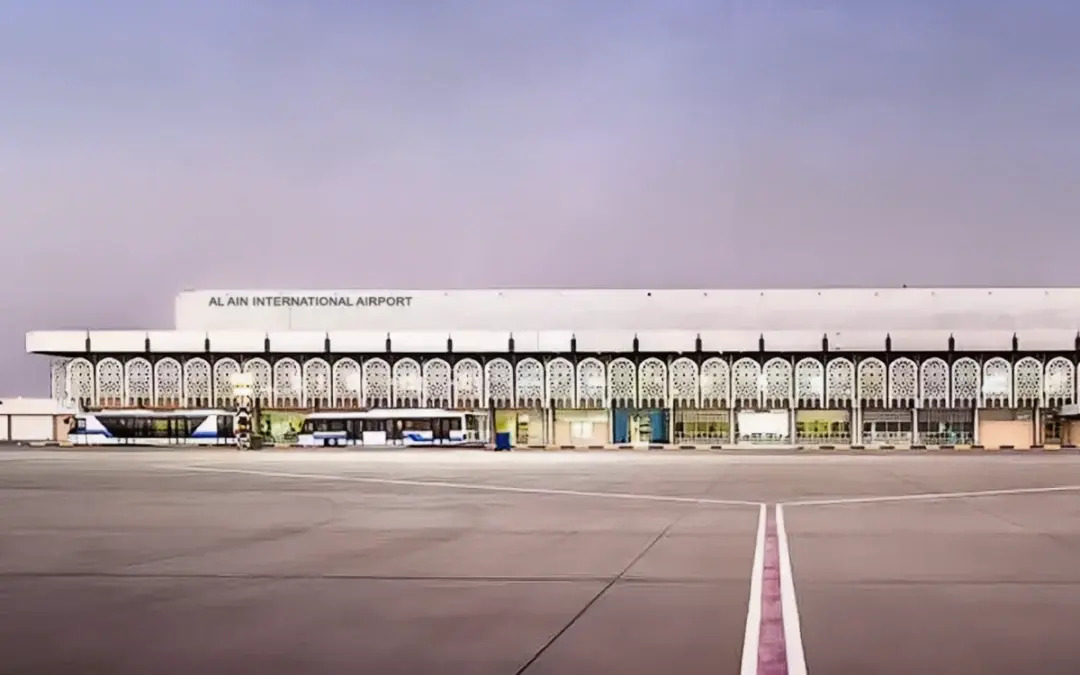
Figures marked “Sourced from gans.aero” are taken from the original record. Others are placeholders for the content team to verify.
Sourced from gans.aero
Two run outside the host country
E-learning plus simulator
Placeholder · to confirm
Network-level traffic study
Post-cutover · placeholder
PBN procedures drafted against the host country's traffic profile, then iterated with the regulator, the ANSPs, the airlines, and the military until every constraint was answered on paper.
Three real-time simulations and one fast-time simulation. Two of the real-time runs were hosted outside the host country to stress-test the procedures against an independent operational baseline.
E-learning packages issued to every ATCO. Approach controllers ran simulator sessions over a two-and-a-half-month window. Dispatchers and airline operations briefed on the same package.
Phased introduction into operational use. Stand-by procedures and fall-back authority pre-agreed with the regulator. Post-cutover surveillance period to catch anything that didn't show in simulation.
Procedures designed inside live, mixed-fleet airspace. Nothing left the validation phase until it could be flown safely by both newer PBN-equipped aircraft and the legacy fleet still in service.
We needed the whole system rebuilt and the lights to stay on. GANS owned the design, owned the simulations, and owned the training. By the time we went live, the controllers were ahead of the procedures, not catching up to them.
Senior leadership, host air navigation authority
Placeholder . to be attributed
New STARs, SIDs, holds, instrument approach procedures and missed approach procedures across the host country, ready for suitably equipped aircraft.
Procedures and sector design now support Independent Parallel Operations at the impacted airports as fleet capability matures.
Peak-hour load split across more controller positions, lifting the practical ceiling on managed aircraft per hour.
Two and a half months of structured training, e-learning packages for every controller, simulator hours focused on the approach community.
The host country was approaching the ceiling of what its legacy airspace could absorb. Procedures had aged out of the era of paper strips and conventional navigation. Sector boundaries had calcified around fleets and route structures that no longer matched the traffic flowing through them. The mandate was clear: bring the entire system, end to end, into a contemporary, performance-based shape.
GANS was engaged as the lead delivery partner. The remit covered new Performance-Based Navigation arrivals (STARs) and departures (SIDs), holds, instrument approach procedures, and missed approach procedures. It covered additional approach sectors inside the CTA so peak-hour load could be split across more controllers. And it covered the readiness path that gets controllers, dispatchers, and airline operations comfortable with the change before the cutover, not after.
Every part of the system was touched. Every stakeholder had to be brought along. Nothing could break in the meantime.
The engagement began the way most national-scale aviation programmers do: not with a clean sheet, but with a busy one. Traffic was still climbing, the regulator was already anticipating the next inspection cycle, and the airlines had fleet refreshes on the horizon that the existing procedures could not absorb. The brief landed in that environment.
GANS led the technical design and then ran the validation, but the work was always going to be larger than either of those roles. Designing new arrivals and departures means negotiating with the airlines whose fleets will fly them. Splitting an Approach sector means rewriting the letters of agreement that govern who hands what to whom and where. Adding holds means rewriting parts of the controller training pack. Every change touched another change.
The team worked through it the same way the team handles every programme of this scale: in phases, with stand-by procedures ready at each gate, and with the regulator briefed on the failure modes before they could happen.
The engagement began the way most national-scale aviation programmers do: not with a clean sheet, but with a busy one. Traffic was still climbing, the regulator was already anticipating the next inspection cycle, and the airlines had fleet refreshes on the horizon that the existing procedures could not absorb. The brief landed in that environment.
GANS led the technical design and then ran the validation, but the work was always going to be larger than either of those roles. Designing new arrivals and departures means negotiating with the airlines whose fleets will fly them. Splitting an Approach sector means rewriting the letters of agreement that govern who hands what to whom and where. Adding holds means rewriting parts of the controller training pack. Every change touched another change.
The team worked through it the same way the team handles every programme of this scale: in phases, with stand-by procedures ready at each gate, and with the regulator briefed on the failure modes before they could happen.